

A path to internationalisation: Canary Islands Business School’s journey

Living on an island has important considerations. As a fragmented territory, it Is much harder to establish communications with the rest of the world. An Ultraperipheral European island presents even greater challenges. The Canary Islands are farther away from Madrid than Rabat, Nouakchott, Dakar, or Banjul.
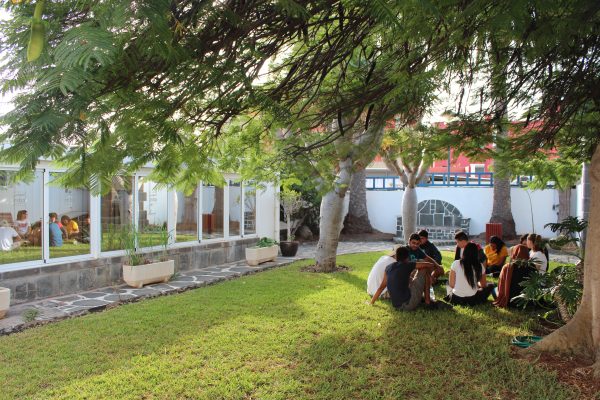
A distant, fragmented territory complicates and usually increases the cost of connecting with the rest of the world. And yet, the internationalisation strategy should be a given for a business school in a region that attracted over 16 million tourists in 2023. The Canary Islands are a fun place to be, with amazing weather and beautiful beaches that make it an ideal location to learn.
Since its establishment in 1986, the Canary Islands Business School (CIBS) has embraced an international vision. Recognising the need for local students to compete in a global marketplace, CIBS became one of the first Spanish business schools to join the European Foundation for Management Development (EFMD) over 25 years ago. Mr. William Braddick, the General Director of EFMD at the time, played a pivotal role in connecting CIBS with international schools. Eventually, Mr. Braddick became the president of CIBS, leaving a lasting impact on the institution.
Forging partnerships abroad
Initially, CIBS focused its attention on the United Kingdom following traditional relations due to the transit of UK vessels through Canary Islands ports, as the famous Canary Wharf of London stands as a reminder. English businessmen and British education have always been admired locally. Over time, the relationship evolved, and the United Kingdom became the most important tourist market for the Canary Islands, with over 17,000 British tourists visiting daily.
For the past three decades, CIBS has sent students to the United Kingdom, training professionals who have made significant contributions to the local society. These alumni now face choices, whether to stay and work locally and believe me, it is not easy to leave Gran Canaria for anywhere else or compete internationally, as the world is their job market. Lately, a third option has arisen as digital nomads have shown the world that one does not have to choose between work and quality of life.
In recent years, political, social, and economic changes, including Brexit, have prompted CIBS to reevaluate its strategy. CIBS has created new agreements with business schools in France, Ireland, and Canada. CIBS has also designed a Winter School that fosters connections with European Business Schools. This unique program combines academic and experiential learning, providing a fun and enriching educational experience for students. The objective is to further expand partnerships in Europe, offering more choices to CIBS students.
Strengthening ties with Africa
Amidst changing demographics and increasing competition, CIBS understood the importance of the geographic location of the Canary Islands in Africa. The awareness led to a strategic focus on Africa, a continent with immense educational needs, home to 25% of the world’s youth population.
Training talent is at the core of CIBS´ mission, and it turns out that talent is just in front. CIBS has turned its attention, its intention, to the African Continent. CIBS joined the Association of African Business Schools, establishing agreements in Cape Verde, Senegal, and Ghana. These agreements include student exchanges and joint projects, as well as workshops and training programs in over ten African countries.
CIBS strives to create a link between African and European business schools, providing a platform for experts, professors, and students to come together, share experiences, and learn from each other. The Canary Islands is a piece of Europe in Africa. Ultimately, Canary Islands Business School is a fun place to be, with amazing weather and beautiful landscapes that make it an ideal location to learn.
AFTER ALL, WHO SAYS THAT LEARNING CANNOT BE FUN?

More information on the Canary Islands Business School can be found on its website.
For additional insights, trends and perspectives on Internationalisation in Business Schools, visit the conversation here.


