

Three key shifts in the evolution of the MBA with Durham University Business School Associate Dean of MBAs

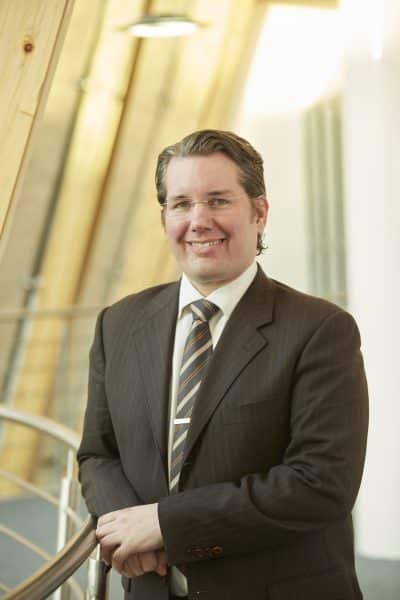
The need to understand how the MBA has evolved, and will continue to evolve, is arguably never-ending. Michael Anthonisz, the Associate Dean of MBAs and Executive MBA Programme Director at Durham University Business School, says that MBAs are more relevant today than they have ever been in many ways. He shares some key insights into the programme and his career so far.
Here are his words:
Tell us about yourself and your career to date.
My route into higher education wasn’t entirely conventional. I started my career in hospitality, working as a chef, which gave me a very practical grounding in service, people, and performance under pressure – things that, interestingly, still underpin how I think about management today.
From there, I moved into academia and have spent the past 25 years working across a range of institutions in the UK and internationally, including time in Switzerland and the UAE. Those experiences were formative: they exposed me to different higher education systems, cultures, and expectations, and they really shaped my interest in international partnerships and global education.
At Durham University Business School, I currently serve as Associate Dean for MBAs and Associate Professor. My role spans the full MBA portfolio – Full-time, Online, and Executive – and covers everything from programme design and quality assurance to recruitment, rankings, and industry engagement. What I enjoy most is the ability to shape programmes that are not only academically rigorous but also genuinely relevant to the challenges managers and leaders are facing today.
What should people expect when they start an MBA?
An MBA should be a transformative experience, but not always a comfortable one.
Students should expect to be challenged – intellectually, professionally, and personally. It’s not just about acquiring knowledge; it’s about learning how to think differently, how to make decisions under uncertainty, and how to work effectively with diverse teams.
At Durham, we place a strong emphasis on developing four core attributes: being resilient, responsible, resourceful, and responsive. These aren’t just abstract ideas – they’re embedded in how we design and deliver the programme. Whether it’s through live consulting projects, team-based learning, or engagement with industry, students are constantly required to apply what they’ve learned in real-world contexts.
Equally, students should expect to be part of a community. The relationships they build – with peers, faculty, and industry partners – are often just as valuable as the formal learning itself.
Please share something that your MBA programme does particularly well.
If I had to highlight one thing, it would be our ability to integrate academic rigour with applied, industry‑relevant learning.
We work very closely with local, national, and international organisations to ensure that what we teach reflects the realities of practice. This is most visible in our strategic consulting projects, where students work on live challenges set by organisations, but it runs throughout the curriculum.
We’ve also been very deliberate in evolving our programmes toward an integrated curriculum. Alongside this, we’ve invested heavily in teaching innovation – whether that’s through flipped classrooms, the thoughtful integration of digital tools, or exploring how technologies like AI can enhance learning while maintaining academic integrity.
Why do MBA programmes remain relevant today?
In many ways, MBAs are more relevant now than they’ve ever been. They have evolved – and have needed to evolve – to reflect the approaches and challenges facing business leaders today. We’re operating in a world characterised by complexity, uncertainty, and rapid change. Organisations need leaders who can navigate ambiguity, think strategically, and act responsibly – and that’s exactly what a well-designed MBA aims to develop.
What has changed is not the relevance of the MBA, but the expectations placed upon it. There is a greater emphasis today on impact, agility, and real-world application. Students and employers are looking for programmes that will help them make a meaningful difference in their organisations and careers from day one. At the same time, business schools have a responsibility to ensure that MBAs contribute positively to society. That means embedding themes such as sustainability, ethics, and responsible leadership into the core of the programme, rather than treating them as add-ons.
What hopes do you have for your MBA graduates?
Ultimately, I hope our graduates leave Durham not just with new knowledge, but with a different mindset.
I’d like to see them become leaders who are confident in navigating complexity but grounded in a strong sense of responsibility – leaders who can balance commercial objectives with broader societal impact.
The four attributes we emphasise – resilience, responsibility, resourcefulness, and responsiveness – are central to this. If our graduates can demonstrate these in their careers, then we’ve done our job well.
I also hope they remain connected to the School, to each other, and to the wider Durham community. The MBA shouldn’t be seen as a single moment in time, but as the start of an ongoing journey of learning and development.
How do you envisage the MBA evolving in the years ahead?
I think we’ll see three key shifts.
First, greater integration and flexibility, allowing students to tailor their learning to their individual career goals.
Second, a deeper integration of technology and data – not only in terms of programme content, but also in how programmes are delivered. The challenge will be using technology to enhance, rather than replace, the human aspects of learning that are so central to the MBA experience.
Third, an increased focus on responsible and sustainable leadership. This is no longer optional – it is fundamental. Business schools must ensure that graduates are equipped to lead organisations in ways that are not only successful, but also ethical and sustainable.
For us at Durham, the focus will remain on staying at the vanguard of applied learning, while continuing to evolve our programmes in line with the needs of the managers and leaders of the future.
For additional insights, trends and perspectives, visit the conversation on MBA Programmes and Leadership.


