

Navigating future Marcom trends with an inner compass
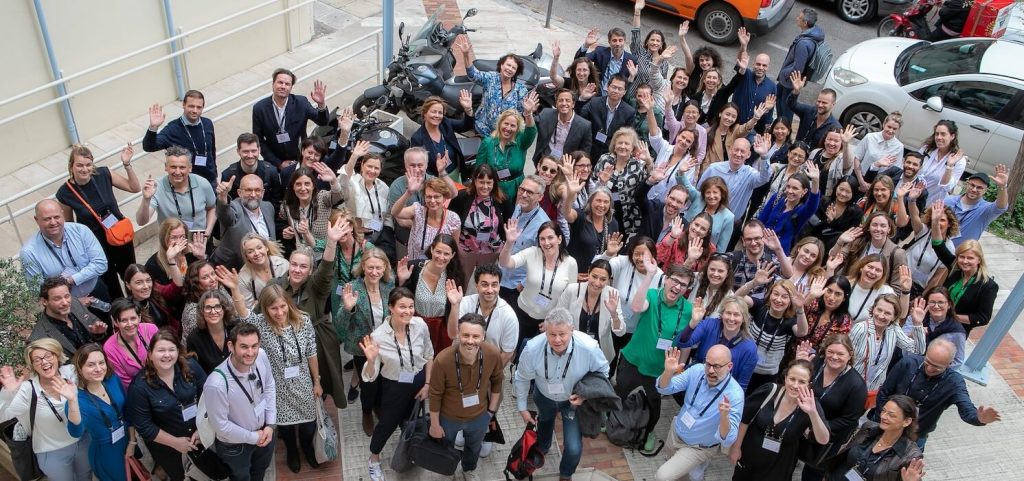
EFMD Marcom Conference, Chair Rachel Maguer reflects on a gathering that explored how business schools must evolve amidst rapid technological shifts, changing global dynamics, and the distinct expectations of Gen Z. Her summary highlights the importance of navigating these changes with an inner compass—grounded in authenticity, sustainability, and data-driven insight—to better connect with our audiences and lead with purpose in an increasingly complex world.
Business schools are undergoing huge transformations in terms of the technology that supports the backbone of our operations, how our faculty teach, and how we work as organisations. AI is positioning itself as a dominant driver in business and society. We can feel the pace of change accelerating and the expectations of our audiences shifting. In higher education, perhaps we face an even greater impact of trends in how the next generations are not just living through these trends but creating them.
This year, the EFMD Marcom Conference steering committee wanted to get right to the core of the future Marcom trends by looking into how we navigate these trends with an inner compass. We started with some key questions that we felt would be important to business school professionals in Marketing, Communications, Alumni Relations and External Relations roles attending the conference:
- What do we really know about how Gen Z think?
- Do we understand how future generations are thinking about building their professional journey?
- How can we adapt to the shifting expectations of our diverse audiences? One size can’t fit all, but how can we anticipate what will resonate with whom?
- Globalisation is at a turning point—what does this mean for business education?
- Can AI really unlock how we harness audience insights?
Over 100 delegates from 26 nationalities joined us to project into the future by closely examining the inner and outer forces defining future trends. We got inside the heads of Gen Z to better understand what makes them tick.
What better place than Athens, the birthplace of dialogue, to host these rich conversations? Over three days, we constantly came back to the one key takeaway: ‘Know your audience and understand what matters to them.’
The conference sessions covered the significant shifts we are living with Gen Z, how inner development is completely intertwined with outer change, the importance of incorporating sustainability into our marketing and communications strategies, the impact of today’s geopolitical challenges and how we can empower a data science culture.
Meeting Gen Z: A new approach to match an almighty shift
In the ever-evolving landscape of higher education, understanding the unique characteristics and preferences of Gen Z is crucial for marketing and communications professionals. Kantar’s recent intelligence on Gen Z consumers reveals a generation that thrives on individual and authentic expression, constantly seeking new ways to identify themselves and craving continuous stimulation. For Gen Z, the concept of planning for the future takes a backseat to enjoying the present moment.

Efi Grimani speaking at the “The future of marketing and the next generation” plenary session
The challenge for higher education
The pressing question for higher education institutions is: How do we meet Gen Z where they are? How can we prepare students for successful careers through the development of soft skills, experiential learning, and exposure to organisations, when this generation seemingly eschews traditional career planning?
The broad ‘one message for all’ strategy is ineffective with Gen Z. They demand content that is tailored specifically for them and delivered by trusted voices—authentic insights from micro influencers resonate deeply with this audience. This generation values the quality of everyday experiences over long-term career plans.
An inflection point in education
We are at an inflection point. There is a noticeable gap between the traditional education model and Gen Z’s expectations. To bridge this gap, higher education institutions must adapt and innovate, creating environments that foster authentic expression, spontaneous learning experiences, and individualised recognition.
By embracing these insights and tailoring our approaches, we can better connect with Gen Z, preparing them not just for careers but for a fulfilling and dynamic life.
Connecting to our inner compass: Cultivating a sustainable mindset through personal reflection
Personal reflection plays a pivotal role in our journey towards a more sustainable and developmental society. By focusing on inner development, we can drive meaningful outer change. This concept is beautifully encapsulated in the Inner Development Framework, which guides us in reflecting on and acting on the principles of ‘Living sustainability’.
The Inner Development Framework
The framework emphasises five key areas:
- Being: Cultivating self-awareness and mindfulness.
- Thinking: Encouraging critical and creative thinking.
- Relating: Building empathetic and meaningful connections.
- Collaborating: Fostering teamwork and collective action.
- Acting: Taking purposeful and impactful actions.
Implications for marketing and communications
Understanding these principles can also inform our marketing and communications strategies. By prioritising authenticity, empathy, and purpose in our messaging, we can create more meaningful connections with our audience. This approach not only enhances engagement but also aligns with the values of a generation that seeks genuine and impactful interactions.
As we embrace personal reflection and the Inner Development Framework, we pave the way for a future where inner development fuels sustainable living. This journey is not just about achieving inner development goals but also about creating a ripple effect that leads to broader societal change.

Discussion groups with Pernilla Thellmark about the Inner Development Goals
Navigating the changing geopolitical landscape in business education
As we face the geopolitical challenges and shifting landscapes head-on, we recognise that we have reached a clear turning point in the world order. Understanding the historical context, the impact of trade, and the dynamics of soft and hard power is crucial for navigating this new era.
We acknowledge that business schools peaked at the height of globalisation and that the breakdown of global markets is already impacting our model. We have to deal with this constant change and adapt our marketing and communications strategies.

Ramon Noguera talks about coping with geopolitical challenges
Shifts in news and information access
In today’s digital age, the way we access news and information has undergone a radical transformation. The rise of social media and digital platforms has led to a fragmented information landscape where “my facts” versus “your facts” have become commonplace.
This shift has contributed to the erosion of a shared reality, making it more challenging to find common ground. There is no longer a shared view.
Trust in education
Amidst this fragmentation, trust in education remains paramount. Educational institutions are seen as beacons of reliability and integrity. In this environment of uncertainty, where do we find hope? We, educators, can provide a brave space—an environment of debate and engagement, creating hope for the future!
The value of empowering a data science culture
AI is omnipresent in 2025, and we looked for a new perspective, emphasising the immense benefits we can unlock by mastering the control centre and leveraging those powerful magic prompts. It is eye-opening to see in minutes just how much we stand to gain by integrating AI effectively into our workflows.
Imagine being able to predict which marketing messages resonate most with prospective students or identify the optimal communication channels. This capability is at our fingertips, and we need to dive in. Data-driven decision-making enables us to refine our outreach efforts, ensuring that we connect with the right audience at the right time with the right message. So, what are we waiting for?
Practical applications of AI are, in fact, accessible to us all. We just need to understand what to feed in and how to effectively use prompts to shape the outputs. We can all think more creatively about how we can harness this technology to drive innovation and efficiency in our own institutions.

Georgios Grigoriadis speaks about data science culture
Incorporating sustainability practices into Marcoms
We were reminded of how important it is to understand the nuanced behaviours and attitudes of your audience. Climate ACT Labs shared qualitative research with a sample that represents the 69% of UK consumers who can be persuaded into sustainable choices but have been traditionally ignored by brands and policy. They’re now known as The Persuadables. A cross-section of people who are willing to live more sustainably if the issues are connected to local choices, if they are normalised and demonstrably easy to fit into everyday life, and if these ideas are communicated with wide appeal.
Implementing sustainable marketing in business schools
Business schools can take a cue from this approach by integrating sustainable marketing strategies into their curriculum and outreach efforts. This involves:
- Understanding audience nuances: Business schools should focus on the diverse attitudes and behaviours of their students and stakeholders. Tailoring messages to resonate with these varied perspectives can enhance engagement and drive sustainable choices.
- Local relevance: Connecting sustainability initiatives to local contexts makes them more relatable and actionable for students. Business schools can develop programmes that highlight local sustainability efforts and encourage students to participate in community-based projects.
- Simplifying integration: It is crucial to make sustainable practices easy to adopt in everyday life. Schools can incorporate practical sustainability modules into their courses, demonstrating how these practices can be seamlessly integrated into business operations.
- Broad appeal: Communicating sustainability in an inclusive manner ensures that the message reaches a wider audience. Business schools can leverage diverse communication channels and collaborate with influencers who resonate with their student body.
By adopting these strategies, business schools can not only educate future leaders on the importance of sustainability but also inspire them to implement these practices in their professional lives.
My key takeaways
- Gen Z’s focus on the present: This generation values the quality of everyday experiences and trusts micro-influencers for authentic insights.
- Creating brave spaces in education: In a world without a shared perspective, our role as educators is to foster environments of debate and engagement, instilling hope for the future.
- Harnessing the power of AI: By mastering the ‘control centre’ and leveraging ‘magic prompts,’ we can unlock AI’s true potential.

2025 EFMD Marcom Conference dinner
Thanks to our speakers, who inspired us to reflect on how we think about our audiences and elevate our Marcoms strategies for the future!
🇪🇸 We would love to see you next year at the 2026 EFMD Marcom, External and Alumni Relations Conference at ESSCA School of Management in Malaga, Spain, from 11-13 May.
For additional insights, announcements and perspectives about Marketing Communications, visit the conversation here.


