

From numbers to decisions: A practical approach to teaching statistics

Decisions using data are of great importance today. Statistics helps business students learn the skills needed to succeed in a competitive world.
Being an Assistant Professor of Statistics at the School of Business, Woxsen University, India, I believe that, I have experienced firsthand just how this subject can change things for the better if taught practically. By focusing on real-life uses and creating a place for hands-on learning, we can connect what we learn in theory to practical knowledge.
The Importance of Statistics in Business Education
Statistics is very important for making good business decisions. It helps in predicting sales, studying market trends, and improving operations. Statistical tools help business professionals make smart choices. For graduate and postgraduate students, learning statistics is now a must.
Employers want people who can use data well, understand complex information, find patterns, and create useful strategies. A practical understanding of statistics helps the students to transform numbers into useful information leading to success in organizations.
Practical Teaching Methods
I believe that learning is practical and so I changed my teaching strategy. I will be focusing more on hands-on activities. Rather than lecturing in class, I have made interactive activities, case studies, and project-based assignments part of the curriculum. Such methods enable the students to relate statistical concepts to the real world and enhance their ability to think critically.
One of the key ways I employ is giving assignments based on surveys. In the process of making and conducting surveys, students get involved in the statistical process of collecting data, cleaning it, analysing it, and interpreting it.
For instance, students can ask people about their preferences for a new product, analyse the data using tools such as Excel or R, and share their results in a business setting. This exercise not only builds statistical ideas but also communication and presentation skills that are very vital for future business leaders.
Leveraging Technology for Enhanced Learning
Using technology is another important part of my teaching method. Programs like SPSS, R, and Tableau help students work with real data and use statistical methods in a professional setting.
By creating real-life industry situations, students become more confident in using statistical tools to solve difficult business problems. I would also suggest they check some open datasets such as the World Bank or Kaggle. This may help them to explore many subjects on economic development, consumer behaviour, or impact on the environment.
Bridging Theory and Practice
The most practical way to teach statistics is by maintaining the balance in place between theoretical aspects and actual use. Ideas such as probability, regression, or hypothesis testing form a foundation. But they are meant to work on the problem at hand, where a decision may have to be taken.
For example, when we talk about regression analysis, I use real-world examples like predicting sales growth based on how much money is spent on advertising or looking at how pricing strategies affect revenue. By connecting theory to real-life situations, students understand why it matters and are more likely to remember what they learn.
Conclusion
This journey of shifting from numbers to decisions-from abstract statistical concepts to tangible business applications -is a must-do for every business student. At Woxsen University, my commitment to a practical, experiential approach ensures that the students will not only be proficient in statistical methods but also properly apply them to solve real-world challenges.
We can prepare a whole new generation of business professionals ready for leadership in data-driven worlds using hands-on learning in conjunction with the integration of technology into industry-relevant projects.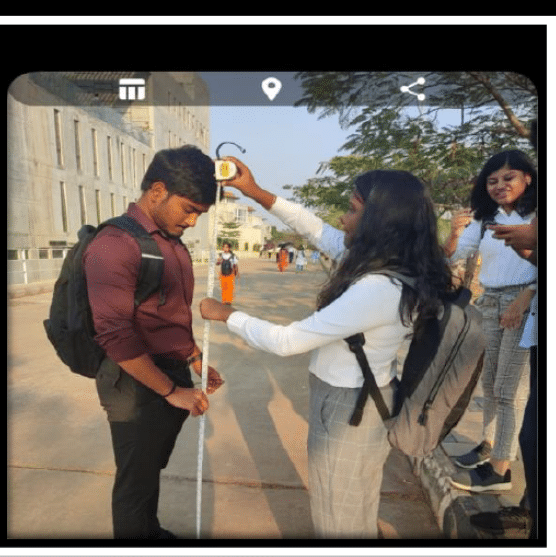
Dr. Boya Venkatesu, Assistant Professor of Statistics at Woxsen University, holds a PhD in Statistics. With eight years of teaching experience, he specialises in Multivariate Analysis, Statistical Quality Control, and Biostatistics. His research focuses on Biostatistics and Statistical Quality Control, with multiple publications. Currently, he is developing new control chart mechanisms for the industrial and business sectors, improving upon existing models through parameter estimation and distribution analysis. He is a Life Member of the Indian Society for Medical Statistics.
For additional insights, announcements and perspectives about other aspects of Business Education, visit the conversation here.


