

Bridging the skills gap: Transforming B-Schools into corporate simulations for enhanced employability

Corporate simulation is a cutting-edge training methodology that immerses participants in realistic, interactive business scenarios, replicating the complexities and challenges of real-world corporate environments.
By leveraging advanced technology, simulation-based training enables executives, managers, and teams to develop critical skills, test strategies, and make decisions in a risk-free setting, receiving instant feedback and assessment. This experiential learning approach fosters collaboration, creativity, and problem-solving while enhancing leadership, communication, and time management skills, ultimately preparing participants to tackle real-world business challenges with confidence and competence.
The growing skill gap among management graduates has raised serious concerns for companies and academics alike. Even with demanding academic programs, many graduates lack the real-world experience, analytical abilities, and decision-making skills necessary to succeed in fast-paced business settings. Traditional classroom instruction often fails to simulate the complexities of actual business operations adequately.
To address this, B-Schools take significant steps to bridge the skill gap between academic knowledge and real-world application. They form corporate partnerships to offer students valuable internship opportunities, live projects, and consulting assignments, providing hands-on exposure to actual business environments.
B-Schools also integrate case studies from real companies and live business projects, enabling students to solve current business challenges. Furthermore, guest lectures and workshops led by industry leaders help students gain insights into business trends and leadership practices. These efforts collectively aim to equip students with the practical skills needed to succeed in the corporate world, ensuring they are prepared for the challenges and expectations of the industry, but still, there’s an employability gap.
The concept of “college after college and corporate before corporate”
The idea, known as “College after College and Corporate before Corporate,” envisions the final year of graduation or post-graduation as a fully immersive, practical training setting.
B-Schools can introduce a “transition year” program where students dedicate an additional year to hands-on training and real-world projects with measurable outcomes. B-Schools need to incorporate corporate simulations onto their campuses by creating small-scale, operational business environments such as corporate offices, retail hubs, startup incubation centres, and operational banks.
These centres can provide students with hands-on experience, bridging the gap between academic knowledge and its real-world application. Within these centres, students can assume various roles, such as marketing executives or financial analysts, and engage in live projects, decision-making activities, and consumer interactions under the guidance of industry professionals and faculty.
For instance, finance students might oversee credit evaluations and customer service in simulated bank branches, while hospitality students could gain exposure to hotel or travel desk operations.
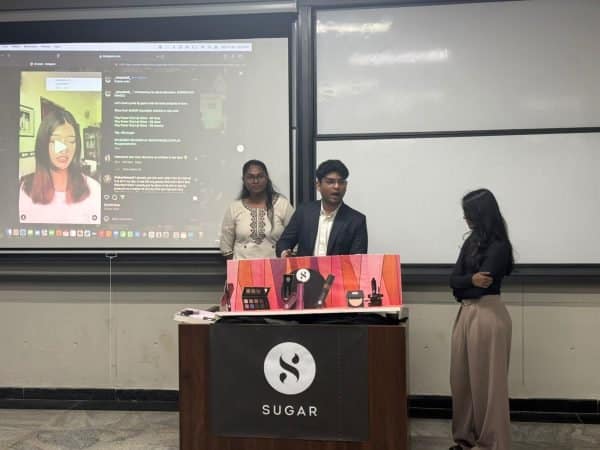
Corporate simulations
Industry-specific simulations, such as those in marketing, finance, and operations management, allow students to experience real business scenarios and develop key decision-making skills. To foster entrepreneurial thinking, several institutions have established startup incubators and innovation hubs, giving students the chance to launch ventures and gain practical management experience.
Corporate simulations can transform campuses into vibrant hubs of experiential learning. These environments allow students to work on practical projects that mirror the challenges faced in actual corporate settings. Simulated spaces like bank branches, retail hubs, and hospitality labs provide opportunities for students to engage in operational tasks and decision-making.
Students gain essential skills such as problem-solving, leadership, and collaboration by working in these controlled yet realistic environments. Advanced technologies, including Customer Relationship Management(CRM) and Enterprise Resource Planning (ERP) systems, business simulation software, and virtual reality (VR), can make these simulations even more dynamic and industry-relevant.
This paradigm offers numerous benefits for students and institutions alike. Students gain confidence, industry-relevant skills, and early exposure to professional responsibilities, significantly enhancing their employability. For institutions, this approach improves placement rates, strengthens industry partnerships, and builds a reputation for producing workforce-ready graduates.
However, challenges such as infrastructure costs, curriculum realignment, and sustainability must be addressed. Collaborating with corporate partners can help secure funding, while industry-driven curriculum design ensures alignment with evolving market demands. Corporate simulation centres should be transformed into revenue-generating entities, contributing to their sustainability.
They can provide consultancy services, operate retail businesses, or offer local training programs to external participants. Encouraging startups and student-led ventures within these centres promotes entrepreneurship and provides students with opportunities to apply their knowledge while contributing to the financial stability of the initiatives. These activities not only enhance the centres’ viability but also foster a culture of innovation and enterprise.
By adopting this transformative approach, B-Schools can bridge the gap between classroom instruction and business demands, ensuring that graduates are not only academically proficient but also prepared to thrive in real-world corporate environments.
Integrating corporate simulations with the 20-80 teaching approach for real-world readiness
As a faculty member in a B-School, I actively integrate scenario-based and activity-based learning methodologies to ensure students gain practical, real-world experience while maintaining a balanced and impactful teaching approach through the 20-80 rule. In this model, 20% of lecture hours are dedicated to traditional teaching, focusing on core concepts and theoretical frameworks, while 80% is devoted to industry-relevant knowledge, case study analysis, and practical application.
I assign strategic projects such as analyzing the introduction of electric vehicles (E-Vehicles) in India and examining their market potential, regulatory challenges, and consumer adoption strategies.
Similarly, I task students with e-commerce-based projects aimed at exploring innovative ways to help rural areas access digital markets, fostering inclusivity and bridging the urban-rural divide. Another example is projects on media trials, where students critically evaluate their impact on public opinion and ethical considerations.
In addition, I design hands-on activities where students take on specific roles, such as crafting interactive emails, creating blogs, or developing social media campaigns for hypothetical product launches.
These tasks help students learn to use hashtags strategically, measure engagement metrics, and refine their digital communication approaches. By engaging in such real-world scenarios, students develop critical thinking, creativity, and problem-solving skills while fostering teamwork and leadership abilities.
Through reflective sessions and constructive feedback, I ensure students understand the practical relevance of their work. This approach equips them with the confidence and industry-relevant skills needed to navigate and succeed in dynamic corporate environments, bridging the gap between theoretical knowledge and real-world application.
Dr Kiran Menghani is an Assistant professor at the School of Business, at Woxsen University.
For additional insights, trends and perspectives on employability, visit the conversation here.


