

Impact Unpacked at the EFMD Americas Conference in Boston
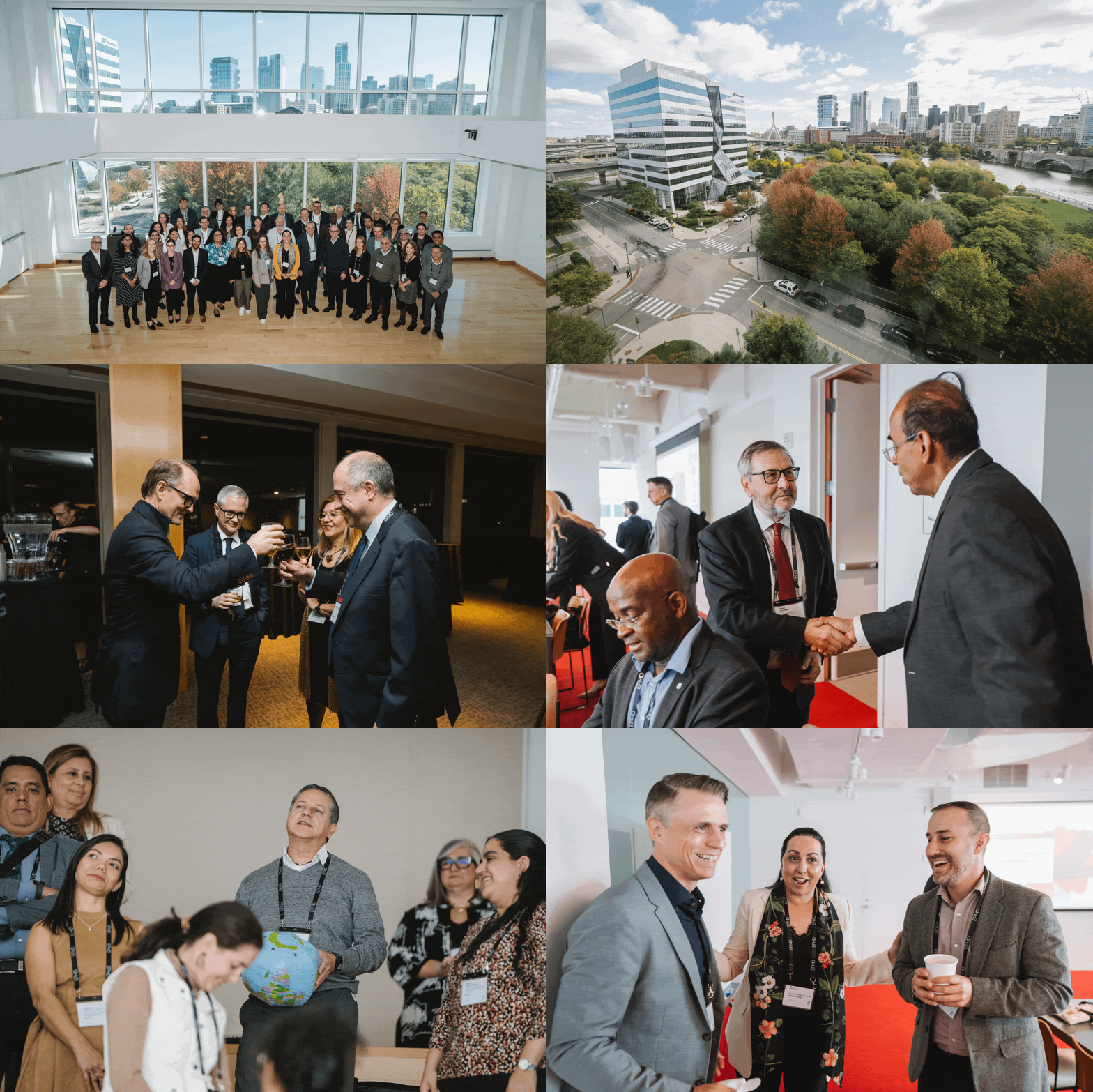
This October, the historic city of Boston hosted the EFMD Americas Annual Conference at Hult Business School. With a focus sharply centred on “Impact Unpacked,” the conference gathered thought leaders from diverse sectors to deliberate on defining and amplifying the influence of business schools in today’s rapidly transforming world.
Innovation and Leading Through Challenge
The conference launched with a stirring keynote featuring perspectives from Scott D. Anthony from the Tuck School of Business at Dartmouth and Adi Ignatius, Editor-in-Chief of Harvard Business Review.
In an intriguing discussion, they shared insights into fostering resilience in business schools. They emphasised the need for an innovation mindset, human adaptability despite technological growth and lifelong learning models. They noted the role of technology as a tool for improvement, with a balanced approach between using technology and maintaining essential human skills such as collaboration. Future leaders are expected to prioritise technology while focusing on humanity, adaptability, and empathy.
“I suggest focusing more, not less, on three things: immersive experiences, experiential learning, and taking an interdisciplinary approach” to the learning experience whenever possible, said Adi Ignatius.

Scott D. Anthony in conversation with Adi Ignatius
Exploration of Value and Assessment
Continuing the first day, during a session moderated by Martin Boehm from Hult International Business School, Jane Mulatz from Sobey School of Business and Juan Romero from IPADE Business School discussed how business schools define and assess their impact, revealing different approaches based on institutional and regional contexts. The Sobey School of Business shared its experience with the BSIS framework for impact assessment, underlining a commitment to social responsibility and positive societal contributions, while IPADE discussed a different approach that relies on a tailor-made logic model that establishes relations between input activities and outputs to measure impact.
The debate also covered the challenges in quantifying social impact, shifting towards a balance between quantitative and qualitative assessments. The session highlighted the complexity of impact measurement, including the lack of a clear definition of impact, the reliance on proxy measures and the difficulty in aligning various information sources.
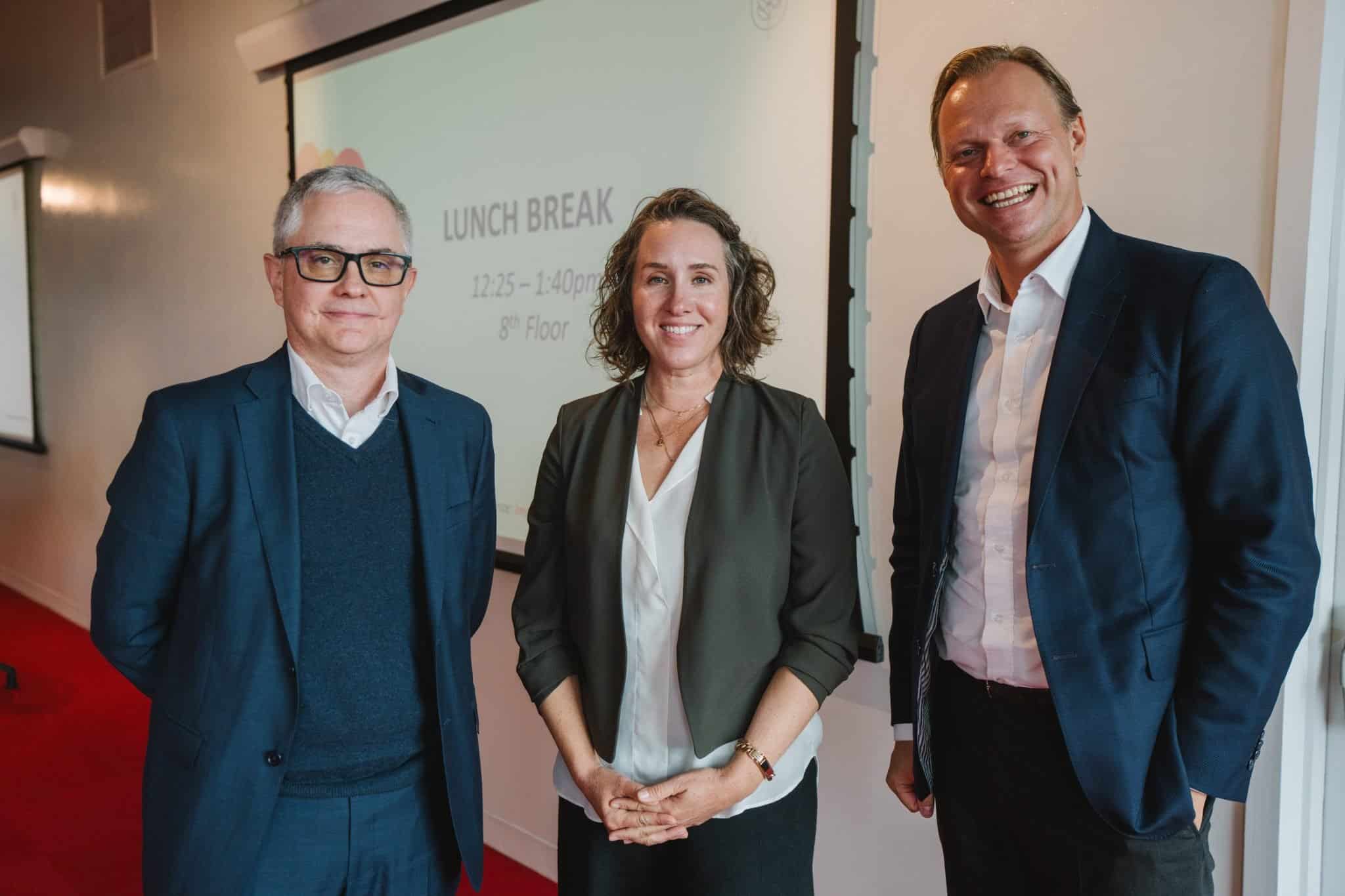
Juan Romero, Jane Mulatz, and Martin Boehm
Corporate POV on the Impact of Business Schools
Industry leaders took the stage to discuss the reciprocal relationship between the corporate world and business schools, emphasising how partnerships benefit both by providing industry insights and access to research and talent. Panellists, including Will Baas of Comcast, Tessa Misiaszek of Korn Ferry Institute, Jeanne Gray of Relay Therapeutics, and moderator Jen Serowick of Hult International Business School, stressed the need for graduates to possess future-proof skills like adaptability, communication, collaboration, and empathy, especially in AI-integrated environments.
They acknowledged challenges in assessing soft skills during hiring and the disconnect between student and employer expectations. The discussion also covered balancing academic and experiential learning, Gen Z’s workplace expectations, authentic leadership, and the growing importance of alternative credentials. Diversity was highlighted as key to innovation, with business schools playing a crucial role in preparing a diverse workforce. The panel concluded that emphasising soft skills alongside technical expertise is essential for developing future leaders.
“There’s a disconnect between what students believe employers want and what employers actually seek: individuals who can integrate into an organisation – by meeting the right people, show curiosity, and be humble, hungry and smart.”
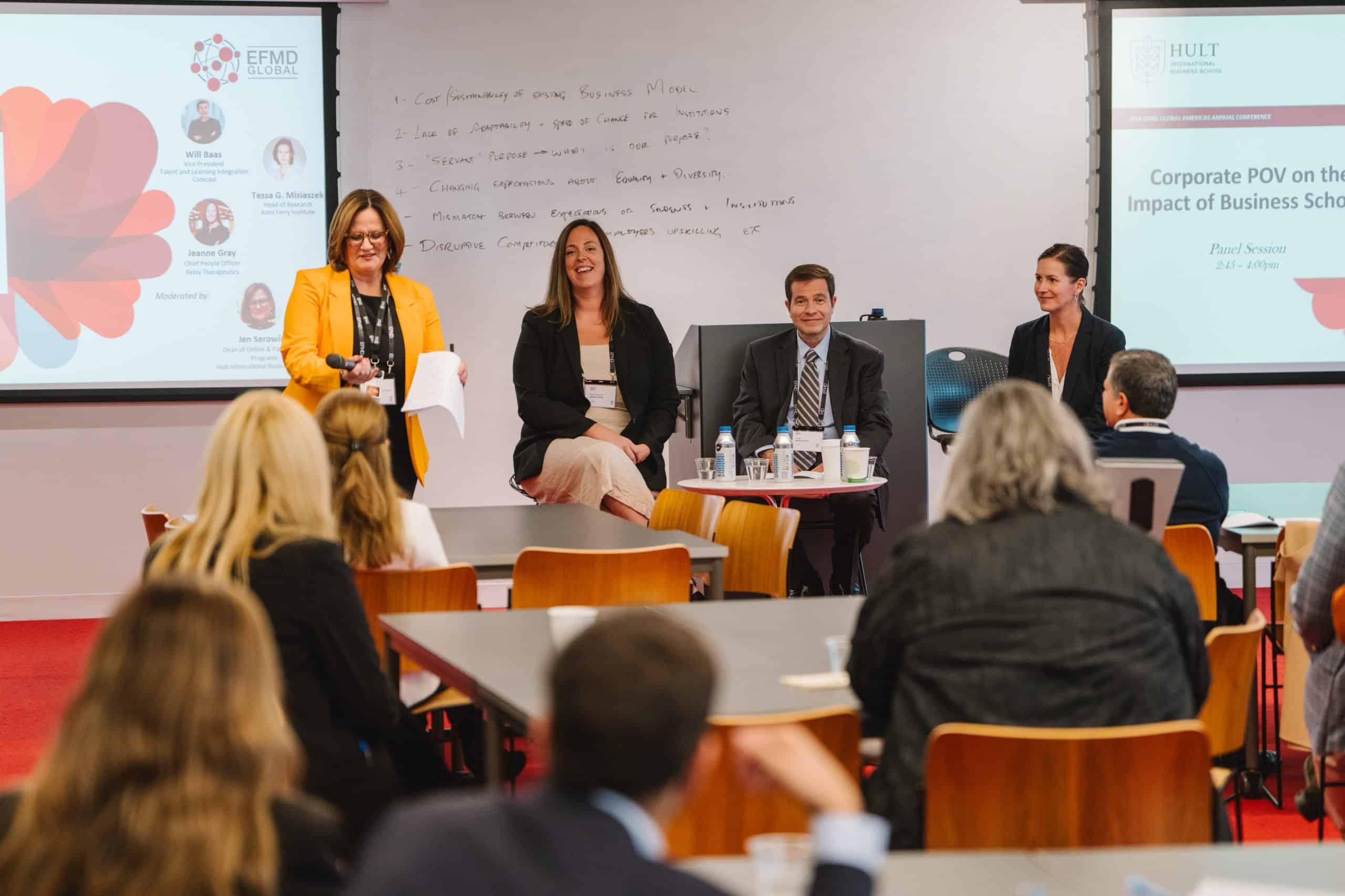
Jen Serowick, Jeanne Gray, Will Baas, and Tessa G. Misiaszek
Societal Impact
Hosting the first breakout session, Sonia Monárrez of EGADE, Omar Romero-Hernandez of Hult Business School, and moderator David Sprott of Drucker School of Management explored how business schools can drive societal change, focusing on assessing and creating social impact.
They delved into a range of strategies for embedding social impact into the very core of business education. They stressed the importance of integrating these goals into schools’ missions, mobilising stakeholders, and forming partnerships with businesses, governments, NGOs, and global institutions. In a rich discussion, speakers and participants examined the significant challenges schools face in producing and measuring social impact. They emphasised the need for effective strategies to engage stakeholders, ensure sustainability across academic subjects, and develop lasting partnerships that extend beyond individual projects.
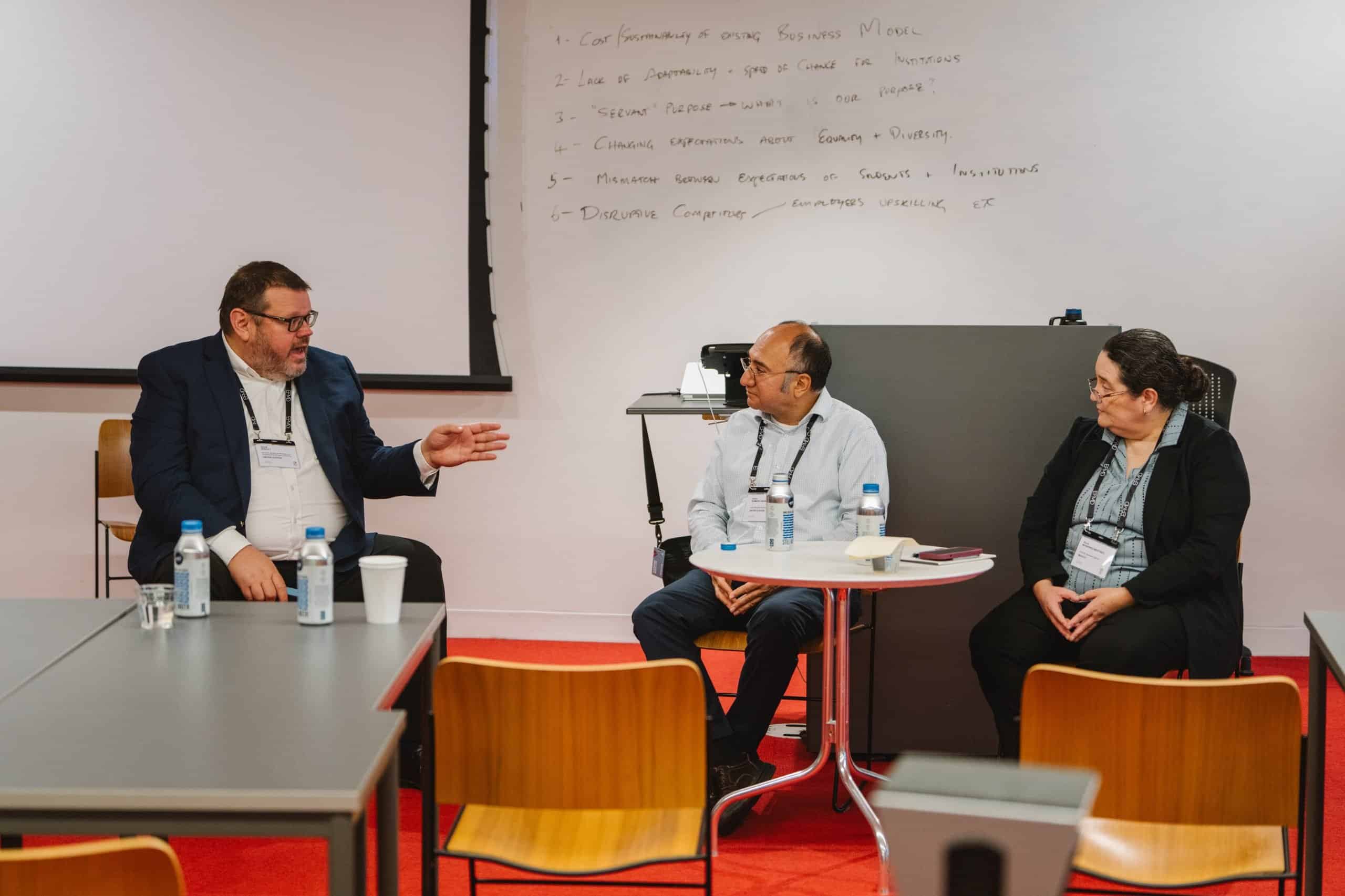
David Sprott, Omar Romero-Hernandez, and Sonia Monárrez
Impact on Research / Intellectual Impact
Beatrice Avolio of CENTRUM PUCP, Pontificia Universidad Católica del Peru, and Mike Smit from Dalhousie University led the second breakout session advocating for a broader understanding of research impact in business schools beyond academic achievements.
The session challenged the misconception that ‘impact’ is limited to research results, emphasising instead how research application drives societal change. They explored three dimensions of research benefits: academic (advancing knowledge across disciplines), societal and economic (benefiting individuals, organisations, and nations), and political (influencing policy and societal norms). They also outlined a framework for managing research impact, which included developing a strategy aligned with institutional goals, assessing support structures for impactful research, and implementing processes for transferring research to stakeholders.
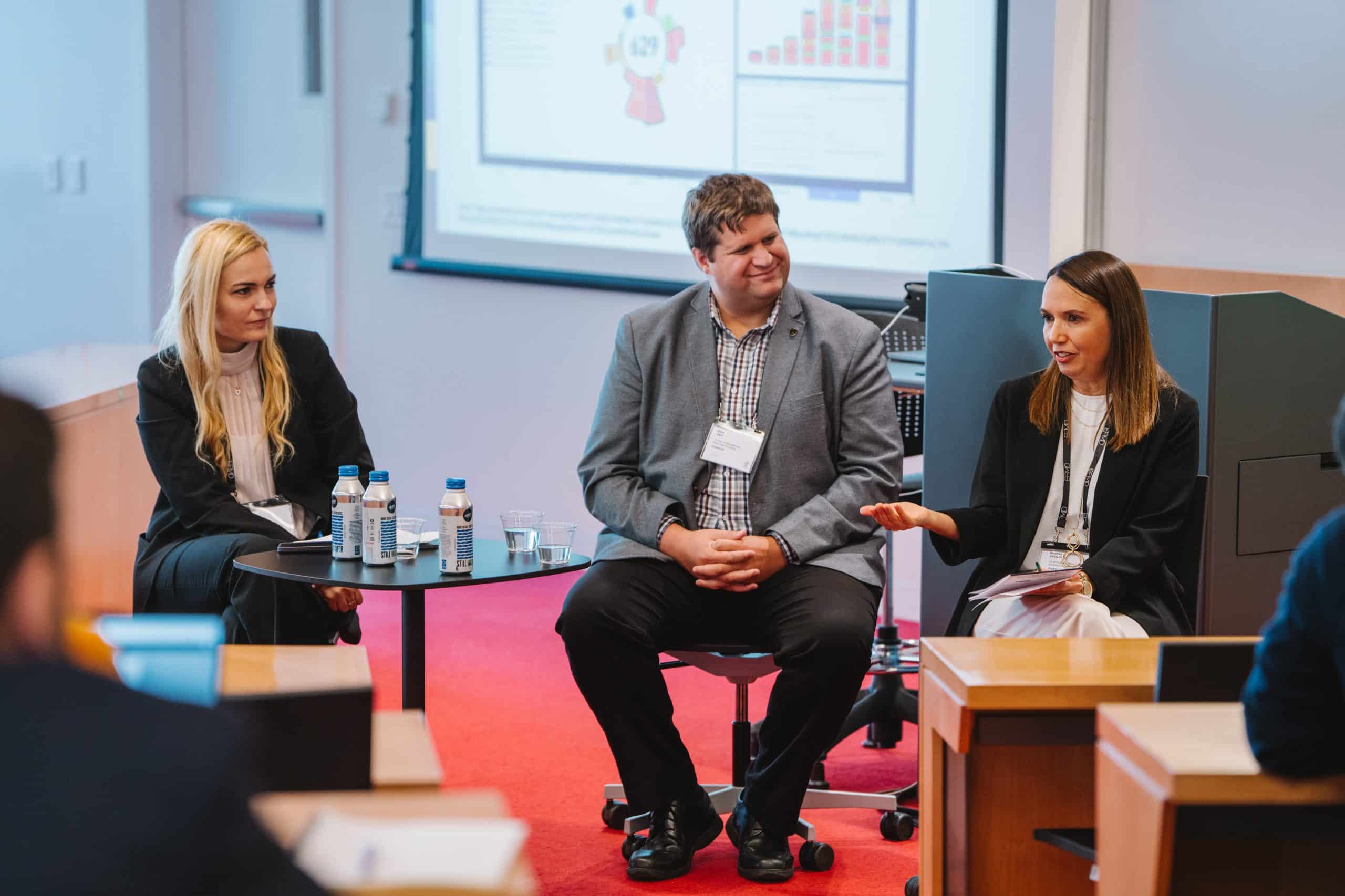
Belisa Marochi, Mike Smit, and Beatrice Avolio
Networking Session: Team Challenge
Following a lovely evening dinner at the Boston Museum of Science, Ronan Gruenbaum and Rob Barlow from Hult Business School kicked off the second day of the conference with an interactive networking activity where attendees collaborated to brainstorm the challenges business schools will encounter over the next two decades.
The working groups identified several key challenges for business schools, including the sustainability of current business models, the gap between student expectations and institutional offerings, competition from alternative education models, and the impact of AI on education. In a cooperative environment, participants voiced various solutions, including investing in innovation and adaptation, redefining business schools’ value propositions, fostering inclusivity and diversity, and emphasising human skills like emotional intelligence, creativity, and collaboration.
The diverse perspectives from across the Americas provided valuable insights, offering practical strategies that participants can apply in their own institutions to navigate the evolving educational landscape.
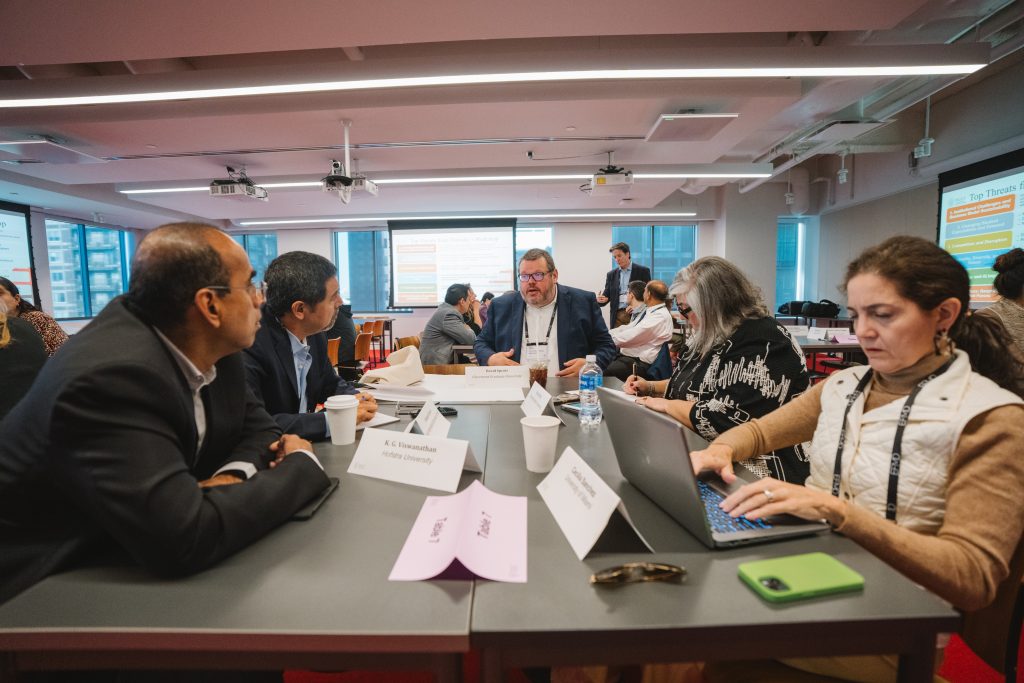
Working groups at Hult Team Challenge
Internationalisation & Sustainability
During the afternoon breakout sessions, Rogerio Paes Costa from Insper, Mike Page from EFMD, and Komlan Sedzro from UQAM School of Management challenged the conventional approach to internationalisation, calling for reimagined strategies that centre on inclusivity, responsibility, and sustainability. The dialogue suggested that while some schools already have relevant initiatives, there is a broader need for intentional planning and strategic revisions to align with these goals more distinctly. They called for continuous improvement, expansion, and sharing of practices in internationalisation, highlighting that institutions can benefit greatly from collaboratively rethinking their approaches to ensuring a responsible global presence.
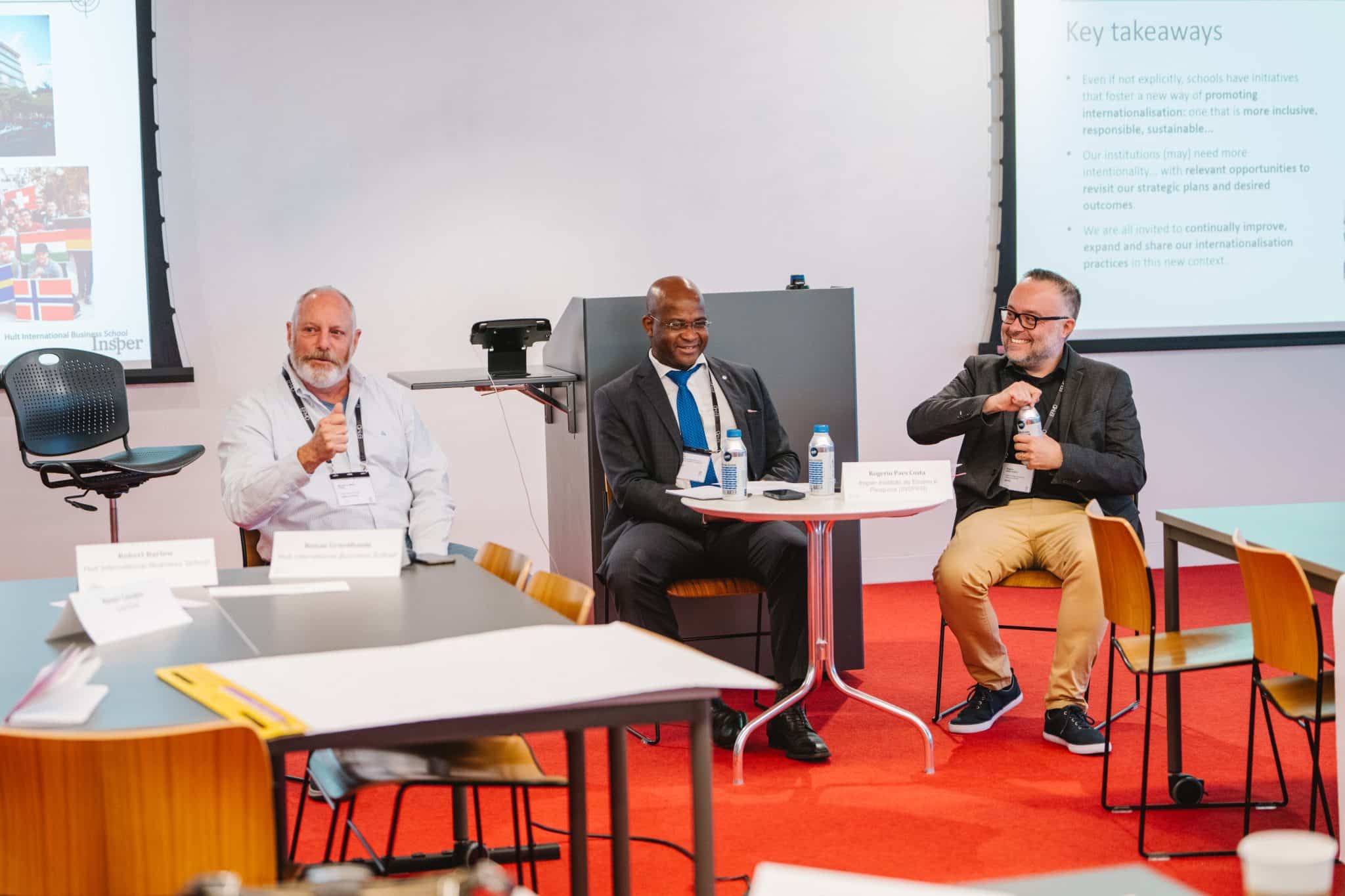
Mike Page, Komlan Sedzro, and Rogerio Paes Costa
Lifelong Learning and Executive Education
Simultaneously, Kristin Risi from Carnegie Mellon University, Paul Carlile from Boston University, and Natasha Veltri from the University of Tampa walked through the role of executive education in lifelong learning and discussed the relevance of current executive education programme offerings for students. They noted the need to prioritise quality education over the vast supply from edtech companies, leveraging business schools’ unique position to offer rigorously researched, evidence-driven content. The emphasis was on creating adaptable, quality-driven executive education programmes that support lifelong learning, leveraging institutional expertise, and enhancing relations with the corporate world, ultimately driving forward the institution’s overall strategy.
“Business schools should help companies uncover their toughest challenges and partner with them to find effective solutions. It’s a win-win situation”
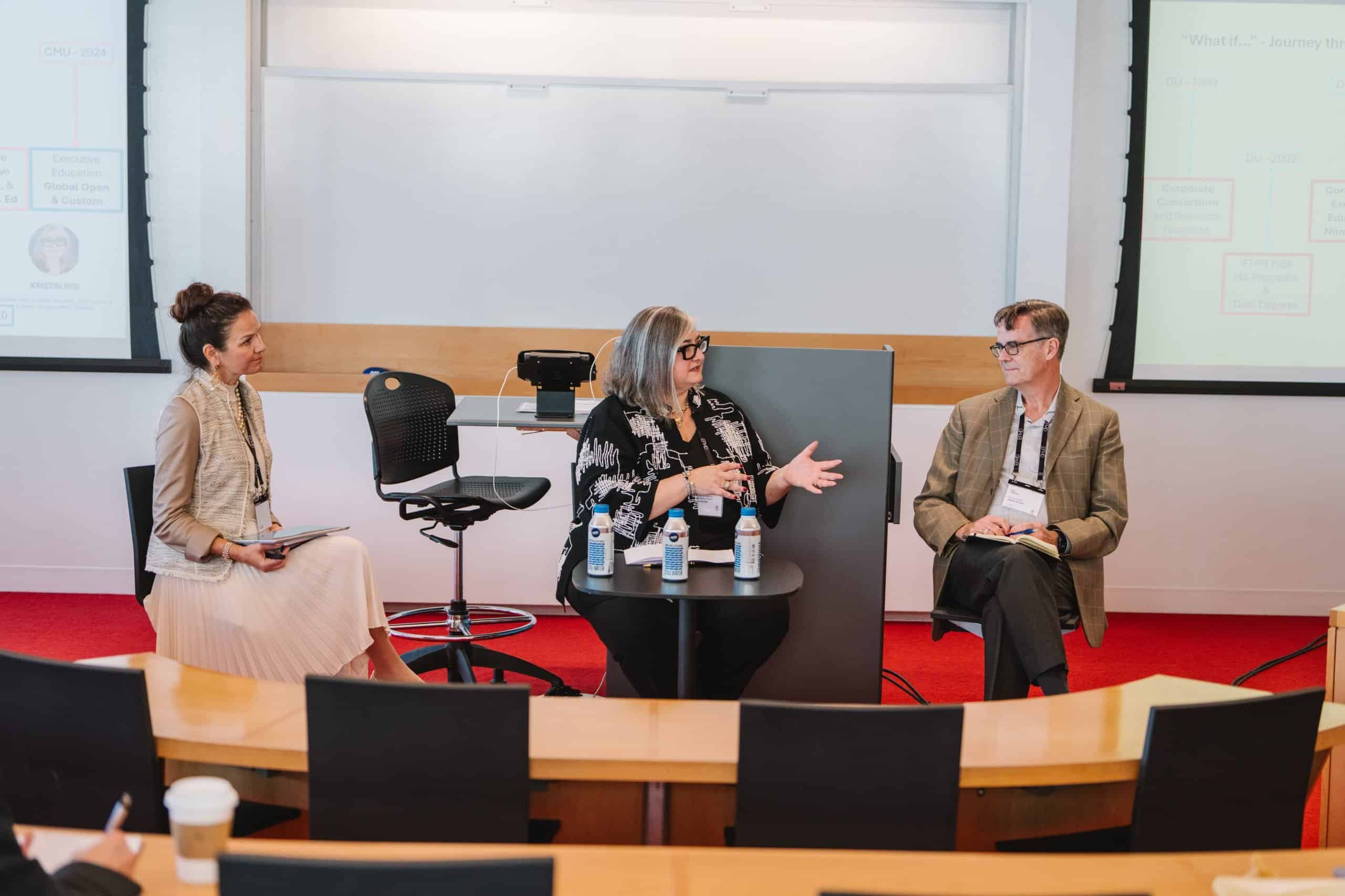
Natasha Veltri, Kristin Risi, and Paul Carlile
Reimagining Business Schools
Wrapping up the conference, in the last plenary session, the dialogue revolved around bold new visions for the future of business schools. Johan Roos from Hult Business School called for developing sustainability that regenerates, fostering leadership with a view on long-term societal impact, and adapting education to entrepreneurial dynamics. He also advocated for a hands-on learning approach, transforming teaching roles to facilitate modern, peer-to-peer, and technology-enhanced learning experiences. Likewise, he pointed out the importance of nurturing practical wisdom over mere technical skills and embracing diverse global perspectives for business schools to follow a future-proof transformation.
Read more about Johan Roos’s insights in his latest blog about the 2024 EFMD Americas Conference.
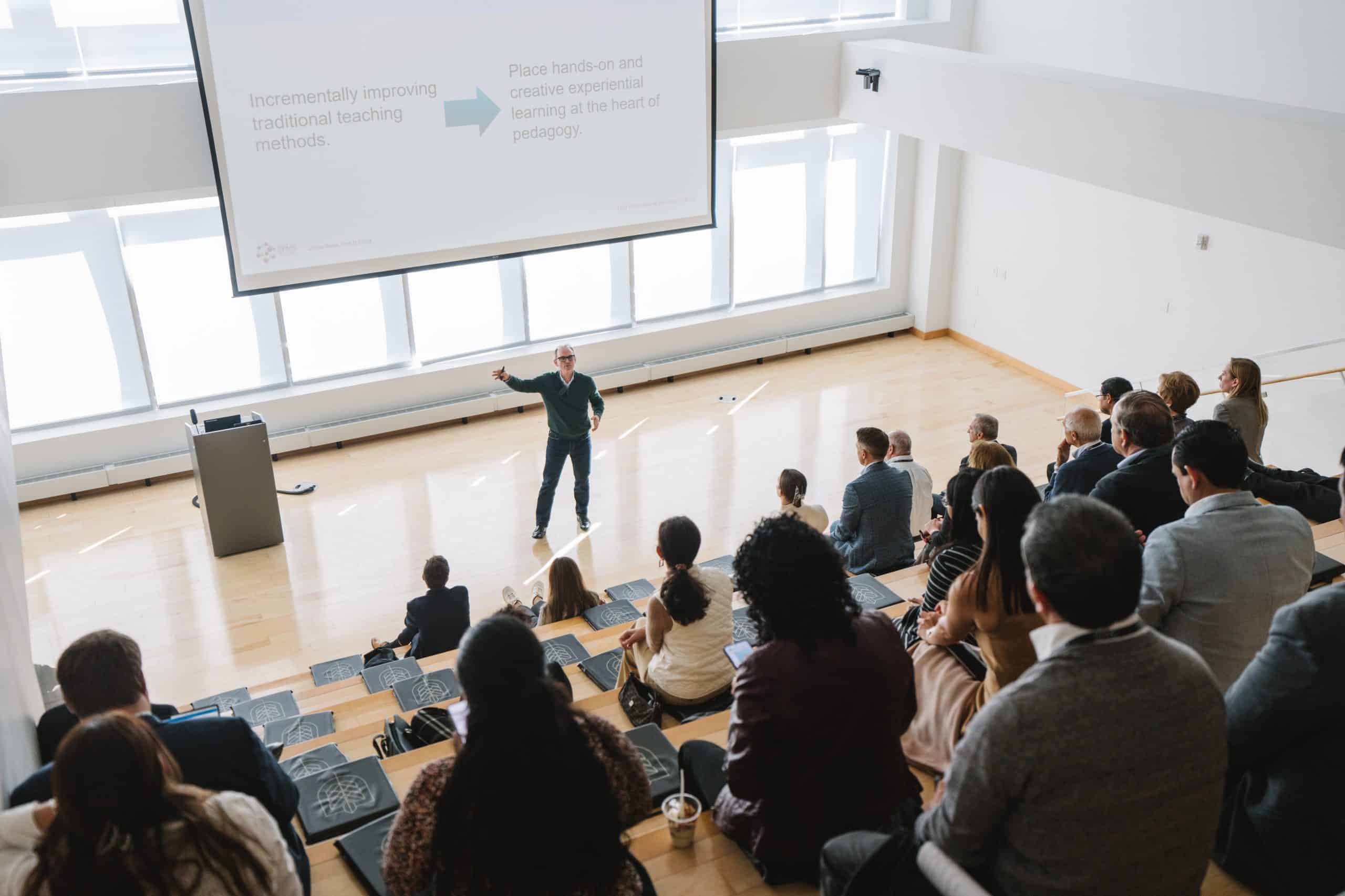
Johan Roos
The 2024 EFMD Americas Conference went beyond exploring the notion of ‘impact’ to redefine its significance within the evolving realms of contemporary and future business education landscapes. Our heartfelt thanks go out to Hult Business School for hosting and to all participants for their invaluable input. We eagerly anticipate welcoming you to the next edition in Lima, hosted by Pontificia Universidad Católica del Perú!
A throwback of the live reactions from the 2024 #EFMDAmericas Conference is available on our X feed.
For additional insights, announcements and perspectives on Business Education, visit the conversation here.


