Estonian Business School Rector looks to AI and beyond
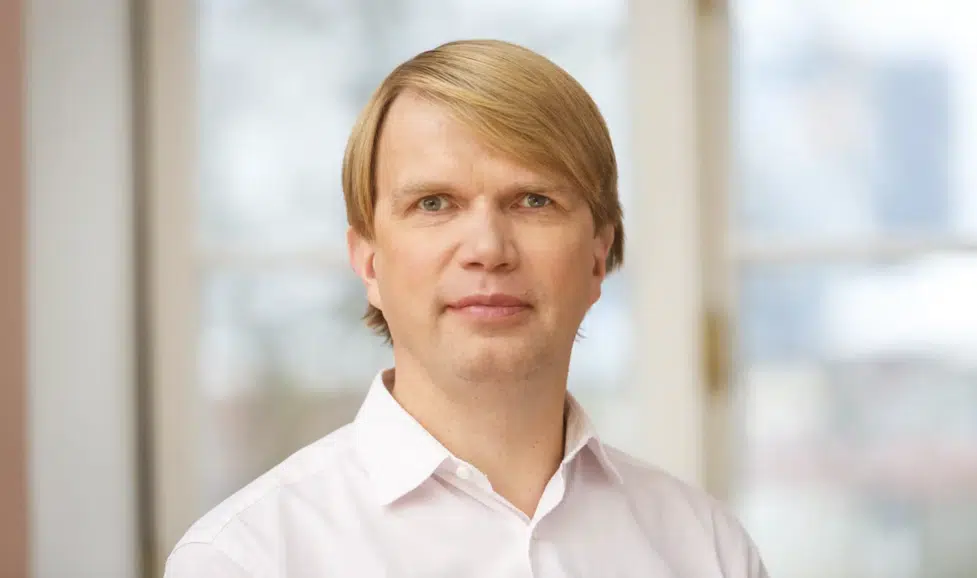
Professor Meelis Kitsing is the Rector of Estonian Business School. His research interests focus on the political economy of digital platform ecosystems.
But how does he prepare students for AI-driven business transformation? What does the future of business education look like? Kitsing shares his thoughts on this and more.
Here are his words:
As rector of Estonian Business School, you’ve emphasised connecting academia, business, and start-ups. How does this shape your approach?
At EBS, we believe it is not enough to talk the talk, but we must also walk the walk with our students and the wider community. Like many business schools, we bring practitioners into the classroom, support startups through accelerators, and benefit from a strong alumni base of founders, including several unicorns. However, what truly differentiates us is that we invest directly in startups. Many institutions lack both the capacity and the capability to do so.
A good example is Ready Player Me, a company founded by our bachelor’s students over a decade ago, where EBS was the first investor. Although our stake was diluted over time as global investors such as Andreessen Horowitz joined, it remained significant until the company’s recent acquisition by Netflix. Beyond the financial aspects, the broader impact is substantial. It demonstrates to our students that building globally relevant companies from Estonia is possible, enriches our teaching and research, and contributes to the wider ecosystem. For example, Netflix has since established an office in Tallinn.
In essence, our model combines private and public value creation: the benefits are reinvested into education, research, and the entrepreneurial ecosystem. Our goal is to replicate this success across our broader portfolio of startups. The EBS endowment fund has made substantial investments into ca. 15 startups in a variety of sectors, ranging from mobility services to satellite data analysis, from smart care solutions to energy-efficient buildings. The impact and value of start-up companies created by the university community have seen an impressive increase in the last 5 years, with several achieving unicorn status and well-recognised brand names (e.g. Bolt).
Estonian Business School positions itself as a bridge between universities and industry. How does this translate into your programmes?
This positioning is reflected in how we design and deliver our programmes. We integrate real-world projects, practitioner engagement, and venture-building opportunities directly into the curriculum. Students are not only exposed to industry challenges but also actively work on them, often in collaboration with companies, startups, and public-sector partners. All of EBSs’ programmes (BA, MA, MBA, PhD) offer all the main elements of entrepreneurship and innovation education as part of their curricula with venture-building and company development being included through dedicated modules.
The school offers designated development and support programmes covering the main elements of entrepreneuship (management and strategic planning, financial managment, HR managment, marketing, technology etc.). These are open to both established companies and start-ups as well as being offered to entrepreneurs within EBS’ ecosystem as part of their developmental path. EBS also offers on-demand coaching and mentoring for students and (prospective) entrepreneurs looking to start, develop or pivot their businesses.
In addition, our accelerators and venture-building platforms are closely linked to teaching, allowing students and wider community members to move from learning to experimentation and, in some cases, to company creation. This creates a continuous feedback loop between academia and practice. For instance, 4 years ago we launched a more applied track in our PhD program in addition to academic track, which allows to integrate working on the real-world business challenge with that of doctoral studies.
We have launched a new bachelor program combining technology and business with the //kood, a programming school founded by several founders of Estonian unicorns such as Wise and Bolt, including our alumni. EBS hosts one of the offices of //kood, which focuses on practical IT skills to help students and adults launch software development careers and meet tech talent demand.
EBS has established an in-house living lab and venture studio where a small, dedicated team works with early-stage founders and startups. Together with faculty, founders and industry partners, it helps entrepreneurial students from across the region to turn research and thesis insights into validated products, pilots, and investment-ready ventures. The studio offers workspaces, mentoring, rapid prototyping, pre-seed capital, and market-access support.
EBS has acquired stakes in two business accelerators, Beamline and Startup Wise Guys, together with whom we offer a full range of services and acceleration programmes to entrepreneurs and young companies. Beamline is focused on the green economy, while Startup Wise Guys, established by EBS alumni in 2012, has grown into one of the best-known accelerators in Europe. EBS closely collaborates with both to train start-up founders and co-invest in companies operating in EBSs’ research focus areas.
How are the priorities of internationalisation and societal impact reflected in educational offerings?
Over the past years, we have significantly strengthened both our internationalisation and societal engagement. We have expanded research and development collaboration as well as capacity building through programmes such as Interreg and Horizon, working with partners like Bocconi University, Hanken School of Economics, and leading Nordic institutions such as Lund University on AI-related initiatives.
EBS is involved in 25 externally-financed R&D and entrepreneurship development projects with a wide network of international partners, including on the creation and spin-out of European deep tech companies (DE-TECH), the creation and scaling of Nordic-Baltic start-ups (TIME2SCALE, ClimateEngine, Baltic Impact Accelerator etc.), the development of AI and sustainability competencies (AI4GOV-X, FINESTAI, L2BGreen, N-SEN, entrepreneurship competencies in Ukraine) as well as projects to improve the efficiency of the public sector (Newton, effective resource distribution mechanisms in education etc.).
At the same time, we have diversified our cross-border education portfolio. Beyond traditional Erasmus exchanges, we offer short, intensive study programmes with partners across Europe and the Americas. These range from study visits focused on Estonia’s digital ecosystem to programmes embedded in partner universities’ curricula, including in Switzerland and Germany. Our long-standing international summer school on digitalisation and sustainability brings together participants from four continents, including policymakers, entrepreneurs, and academics.
EBS is a founding member of the Rohetiiger network (Estonia’s leading green transition NGO), a partner in Sustainable Business Estonia (KELL), the Estonian Clean Industry and Technology Association, the Estonian Venture Capital Association as well hosting Junior Achievement Estonia (leading youth entrepreneurship foundation in Estonia). EBSs’ management and staff regularly participate in expert and policy advisory groups set up by the EC and the Estonian government as well as in executive and advisory functions in numerous public, private, NGO and academic bodies.
Most interestingly, EBS has founded and hosts Aldous Huxley Center in Tallinn, which promotes interdisciplinary dialogue and developing innovative approaches to new socio-economic collaboration models in addressing modern global challenges.
Our venture building initiatives are international by default as it is usually case in Estonia where the small size of the country encourages startups to become immediately international after the founding. EBS-linked accelerator Startup Wise Guys operates all over Europe and also in Africa. Our portfolio companies are primarily focusing on global markets. If we look at the valuation of EBS alumni-founded companies, then it exceeds 10 billion euros. By this highly imperfect measure which is heavily used by many universities to measure their societal impact, we are pulling above our weight many times.
The combination of various education, R&D, and venture-building initiatives ensures that we generate not only academic value but also broader societal impact.
How do you prepare students for AI-driven business transformation?
We approach AI not as a standalone technical subject but as a transformative capability embedded across business functions. AI is integrated horizontally into strategy, operations, and entrepreneurship.
In practice, this means encouraging responsible experimentation with AI tools, including large language models, and embedding them into both teaching and administrative processes. We also offer executive programmes focused on how leaders can use AI to enhance decision-making, innovation, and efficiency.
Importantly, our most successful initiatives are not just abstract courses, but hands-on workshops that demonstrate how AI can be applied in real organisational contexts.
EBS is an associated member of the EUonAIR European University Alliance, which focuses on transforming higher education through the responsible, ethical, and collaborative integration of Artificial Intelligence (AI). EBS is also a member of the Eesti.ai initiative set up by the government of Estonia to accelerate the introduction of artificial intelligence in the country in order to support the development of people’s skills, the productivity of companies, and the quality of public services.
You’ve highlighted the need to integrate AI and sustainability. How do programmes help students navigate both agendas?
AI and sustainability are often discussed separately, yet in practice, they are deeply interconnected. At EBS, we encourage students to critically engage with both the opportunities and trade-offs. While AI can increase energy consumption, it can also enable more efficient resource use, optimise supply chains, make the energy grid more efficient and support circular business models.
We translate this into practice through interdisciplinary initiatives such as AI-focused hackathons, including those organised in collaboration with the Estonian Ministry of Defence. These events bring together diverse teams to solve real-world challenges related to resource efficiency, circularity, and sustainability.
We also emphasise reflection and future-oriented thinking through scenario-planning workshops in various settings, including master’s programmes and our international summer school, for instance. The goal is to develop leaders who understand both the technological and societal dimensions of transformation.
How do you embed entrepreneurship and venture-building into teaching?
Entrepreneurship at EBS is not confined to a single course or programme. Through our accelerators, venture studio, and direct investment activities, students have the opportunity to develop and scale their ideas in a real-world environment.
EBS has established an in-house living lab and venture studio where a small, dedicated team works with early-stage founders and startups. Together with faculty, founders and industry partners, it helps entrepreneurial students from across the region to turn research and thesis insights into validated products, pilots, and investment-ready ventures. The studio offers workspaces, mentoring, rapid prototyping, pre-seed capital, and market-access support.
EBS has acquired stakes in two business accelerators, Beamline and Startup Wise Guys, together with whom we offer a full range of services and acceleration programmes to entrepreneurs and young companies. Beamline is focused on the green economy, while Startup Wise Guys, established by EBS alumni in 2012, has grown into one of the best-known accelerators in Europe. EBS closely collaborates with both to train start-up founders and co-invest into companies operating in EBSs’ research focus areas.
For instance, our bachelor program entrepreneurship in digital era practical, 3-year international programme is designed for aspiring founders and startup managers. It focuses on digital tools, business development, and launching companies, enabling students to turn ideas into ventures through mentorship.
We also ensure that teaching is closely linked to practice. Students learn from founders, investors, and practitioners, while also engaging in hands-on projects that may evolve into actual ventures. Our approach bridges the gap between education and execution.
The most recent alumni survey conducted and covering all Estonian universities shows that 40% of EBS graduates have founded a company (at least with 2 employees or more). Estonian companies are primarily small and medium but our alumni such as Marting Villig, co-founder of Bolt, give our students as future founders tremendous inspiration how to build globally competitive unicorns.
Looking ahead, how do you think business education will evolve?
One way to think about potential future trajectories is to look back. I recall that when I was in graduate school in Boston in the early 2000s, I took a course that combined corporate finance and law. We were working on contracts as well as financial projections and aligning them for negotiating the privatisation of a large telecom company. We were taught to be “transaction cost engineers.”
This engineering paradigm has come to dominate over the decades, as we now call people who ask smart questions and give relevant directions to various large language model applications “prompt engineers.” I would say that we need more artistry, more business artists. Even the exercise I described above involves a considerable amount of artistry in combining financial projections and contracts in negotiations. Routine tasks can be delegated to large language models, but human creativity, with its imperfections and unpredictability, which is an essential part of business endeavours, cannot.
In my view, many business schools have become too similar to traditional universities over the last few decades, emphasising academic credentials over solving real-world problems. In the future, business schools must be at the forefront of keeping higher education relevant by breaking categories and compartmentalisation. Business education will need to become more integrated, flexible, creative, and practice-oriented. The traditional separation between disciplines will continue to erode, particularly as technologies such as artificial intelligence reshape business models and organisational structures.
At the same time, business schools will need to balance experimentation with critical reflection. It is not enough to adopt new technologies; institutions must also understand their broader societal implications. Collaboration across sectors between academia, industry, and government has become increasingly important, not just in rhetoric but also in practice. Otherwise, the rationale for universities will start to diminish. This is particularly important for business schools, which by default should be more connected to real-world affairs than some other faculties.
Our strategy responds to three fundamental challenges that determine long-term success and legitimacy in business education: credibility, relevance, and resilience. Credibility focuses on academic excellence, quality assurance, and international recognition. Relevance ensures that business education and research address real-world challenges and generate measurable economic and societal impact. Resilience underpins the ability to thrive in a volatile environment shaped by demographic decline, funding pressure, and global competition.
Is there anything else you would like to add?
I would like to emphasise that Estonian Business School has focused on elevating teaching quality and strengthening research and development, even in an exceptionally challenging environment shaped by a continuous “permacrisis.” This includes the aftermath of COVID 19, Russia’s full–scale war in Ukraine, economic slowdown, high inflation, and policy pressures in higher education. The discriminatory public policy context is particularly concerning, as we operate in a heavily regulated area with many government–imposed obligations, without sufficient government support to ensure fair play and equal opportunities for private universities.
Despite these challenges, we have remained committed to excellence. This is reflected in our international recognition, including receiving the 5 Palmes of Excellence and becoming the first institution in Estonia to receive EFMD’s five–year accreditation for our bachelor’s programme.
Ultimately, our experience shows that resilience, innovation, and openness to collaboration are essential for business schools seeking to remain relevant in a rapidly changing world.
For additional insights, announcements, and perspectives, visit the conversation on business school leadership.