

All the right skills, all the wrong signals: France’s preparatory classes in the age of AI
In France, the traditional, even “royal,” route into the top Master in Management programmes at business schools such as HEC Paris, ESSEC, and ESCP Business School runs through the classes préparatoires, commonly known as prépas.
These demanding two-year programmes, taken after high school, prepare students for the highly competitive entrance examinations to France’s grandes écoles in fields such as engineering, social sciences, and, of course, business.
Regardless of which prépa track students attend, the curriculum is broad, albeit with different areas of emphasis, covering mathematics, economics, history, geopolitics, philosophy, literature, and languages. Students attend more than 30 hours of classes per week, combined with a comparable, often much greater, amount of self-study, frequent written examinations, and weekly oral defences designed to build analytical depth, argumentative rigour, and the ability to perform under pressure.
After years of decline, enrollment in these programmes has recently rebounded. Still, many talented students now choose to enter business schools directly through bachelor’s programmes in France or abroad, seeking earlier exposure to discipline-focused management studies and a more international environment. Ironically, in an AI-driven age, prépas cultivate precisely the skills organisations need: adaptability, resilience, structured reasoning, and interdisciplinary thinking. Yet they often still project a tradition-bound image of education.
Cultivating the right skills for an AI-driven future …
In an era in which the half-life of knowledge is shrinking rapidly, employers value transversal skills more than ever. These include learning agility, resilience, structured problem solving, and interdisciplinary judgement, to name just a few. The curricula of prépas are remarkably aligned with this agenda.
Students move daily between abstract mathematics, geopolitical analysis, and philosophical argumentation. They must absorb new frameworks quickly and apply them under pressure. This goes beyond intelligence: learning agility is meta-learning, learning how to learn, the capacity to structure and restructure knowledge. In AI-enabled organisations, where tools and knowledge evolve continuously, this ability becomes foundational.
The competitive structure of preparatory classes, with frequent high-stakes exams, weekly oral examinations, and student rankings, also builds resilience and the ability to perform under pressure. Students learn to manage stress, recover from setbacks, and sustain effort over long periods. In AI-enhanced firms marked by rapid decision cycles, information overload, and high ambiguity, psychological robustness becomes a strategic advantage.
Moreover, the strong emphasis on mathematics and economic modelling develops structured problem-solving skills. Students learn to decompose complex problems, formalise assumptions, and construct logically coherent arguments. In data-saturated environments, leaders must not merely consume analytics but question models, test assumptions, and assess uncertainty.
Finally, preparatory classes train students to integrate diverse fields into their reasoning. This multidisciplinarity fosters contextual thinking and interdisciplinary judgment, both essential in a world where technological transformation intersects with climate change, ethics, and geopolitical shifts.
… While conveying signals of a tradition-led past
And yet, while the skill architecture of the prépas is strikingly contemporary, the image of the prépas often remains anchored in tradition.
Handwritten examinations, strict hierarchies, and teacher-centred instruction signal rigour and seriousness. At the same time, they may evoke an impression of outdated structures, reminiscent, at least in the public imagination, of a Napoleonic model of education, with limited openness to pedagogical innovation or evolving professional realities. Whether accurate or not, this perception persists.
Prépas are also frequently associated with memorisation and formulaic essays. Although the curriculum demands significant analytical depth and intellectual discipline, the narrative of encyclopedic learning remains powerful. For a generation raised with generative AI and ubiquitous information access, such imagery may appear misaligned with contemporary knowledge work.
Questions about international exposure and practical engagement further reinforce the gap. While language training is rigorous and geopolitics central, immersion abroad remains the exception. Project-based pedagogy and structured interaction with the corporate world seem limited. The dominant perception is that preparatory programmes are largely academic, theoretical, and exam-oriented. Whether this reflects the full reality is secondary to the strength of the image conveyed. The result is a branding paradox: forward-looking skills, backwards-looking signals.

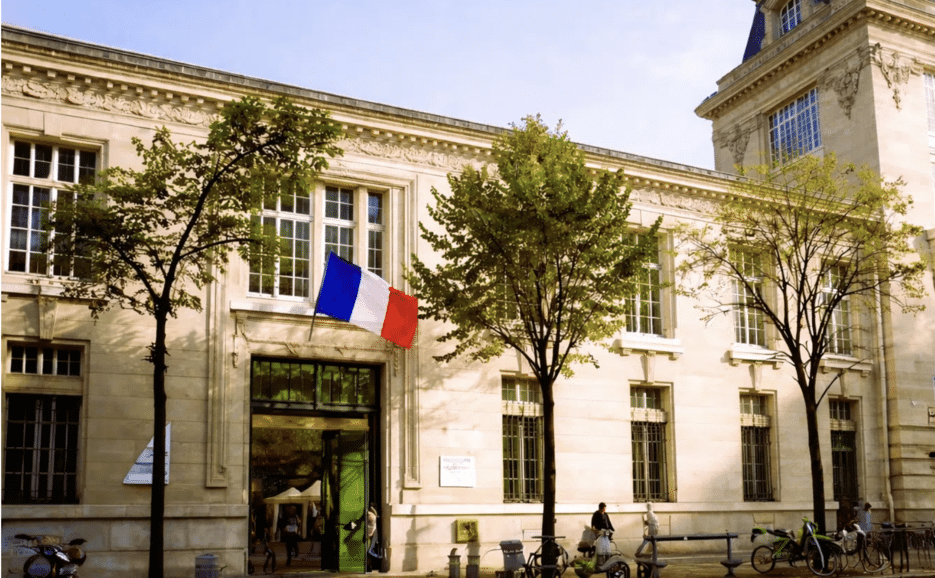
Lycée Henri-IV, one of France’s top prépas, alongside Louis-le-Grand & Sainte-Geneviève
From legacy signals to forward positioning
How, then, can preparatory classes close the gap between what they cultivate and how they are perceived? Rather than presenting themselves primarily as gateways to elite schools, defined by endurance and competition, they could position themselves as accelerators of future-ready leadership capabilities. Their communication could foreground what they demonstrably build: analytical rigor for data-driven strategy, intellectual breadth for complex global challenges, and resilience for volatile technological environments.
Rather than being perceived solely as training grounds for entrance examinations, preparatory classes might emphasise their role as preparation for the professional world itself. Their close integration with business schools is logical and structural, particularly since preparatory classes do not award standalone degrees. Yet this does not preclude articulating a clearer, more autonomous identity: that of an intensive formation programme for high-potential talent preparing for careers in an AI-driven employment market.
The labour market is increasingly attentive to demonstrable skills rather than formal credentials alone. Skills-based hiring is no longer theoretical. Companies such as Google have relaxed degree requirements for many roles and introduced short-cycle professional certificates as alternatives to traditional four-year programmes.
While direct recruitment from preparatory classes remains unlikely, the broader evolution of hiring practices makes new pathways conceivable. Corporate interest in prépa-trained profiles is tangible. During my years as provost at ESCP Business School, companies regularly expressed a preference for Master in Management graduates who had completed a classe préparatoire prior to entering the Grande École programme.
If preparatory classes embraced a positioning as high-intensity incubators of analytical and leadership potential, selective pedagogical adjustments could reinforce the message without compromising academic depth. Short, well-designed project modules could expose students to concrete strategic problems.
Hackathons, consulting-style team assignments, or digital innovation sprints would signal contemporary relevance while preserving core strengths in structured reasoning and disciplined analysis. Similarly, integrating selected English-language modules or developing international partnerships could broaden global exposure and enhance attractiveness for internationally oriented students.
Reframing prépas as environments that train a future-ready workforce could even help address the persistent criticism that they reproduce social elites. Shifting the focus from academic pedigree to transversal competences could broaden access in a coherent and meaningful way. During my years as provost, I saw how diversity efforts centred on scholarships and outreach, while admissions still prioritised traditional academic metrics.
But was that truly transformative? What about talented students whose grades masked their potential, perhaps because they worked part-time to support their families? An alternative admissions pathway exists today for exceptional candidates below standard academic cut-offs. Moving beyond GPAs, assessment centers evaluated resilience, adaptability, and leadership, bringing to the school high performers in precisely those skills most sought after in today’s job market, students who would otherwise not have been admitted.
The goal is not reinvention, but alignment. In an AI-driven economy that prizes transversal skills, preparatory classes have a compelling story to tell. Sharper positioning, supported by measured curricular evolution—and, why not, certified skills development—would simply ensure that the signal matches the substance.
A French model with global potential?
Interestingly, many leading French business schools are reintegrating elements long central to the prépa tradition: geopolitics, quantitative rigor, and even philosophy are reappearing in bachelor’s curricula. Multidisciplinarity is regaining legitimacy: arguably a strong endorsement of the future-proof nature of the prépa pedagogical model.
Business school bachelor’s programmes offer earlier international exposure and proximity to practice. Prépas offer unmatched analytical intensity and intellectual discipline. Both pathways are legitimate; each serves different profiles and learning styles. Both must evolve, but from distinct starting points.
Preparatory classes are therefore not remnants of the past but institutions with considerable forward-looking potential. They may even hold untapped global relevance. For international students seeking rigorous preparation before entering leading business schools and, ultimately, the professional world, the French preparatory pathway could represent an underappreciated opportunity. The principal barrier remains linguistic fluency in la langue de Molière, as prépas are conducted almost entirely in French rather than English. Yet for those willing to overcome this obstacle, the intellectual return on investment may be substantial.
About the Author

Professor Dr. Andreas Kaplan, President of KLU, Hamburg & Ho Chi Minh City
Andreas Kaplan has lived and worked primarily between France and Germany. He studied business at LMU Munich and completed the Master in Management (Grande École) at ESCP across Paris, Oxford, and Berlin. He earned his PhD jointly at the University of Cologne, HEC Paris, and INSEAD, followed by an HDR from Sorbonne University. He is an alumnus of ENA, now INSP (Class of République).
Kaplan began his career at ESSEC and Sciences Po before returning to ESCP, where he held several senior roles, ultimately as Rector and Dean in Berlin and Paris. He is now President of KLU in Hamburg, with a campus in Saigon, Vietnam, and others planned in Africa (Johannesburg, South Africa) and the Americas (Bogotá, Colombia). Published by Cambridge, Columbia, Harvard, and Oxford, Professor Kaplan is ranked by Stanford among the world’s most cited researchers.
Bestselling author of The University of the 21st Century and Business Schools Post-Covid-19, Andreas Kaplan is a leading voice on the future of higher education.
For additional insights, trends, and perspectives on AI, visit the conversation on Artificial Intelligence in Business Education.


